
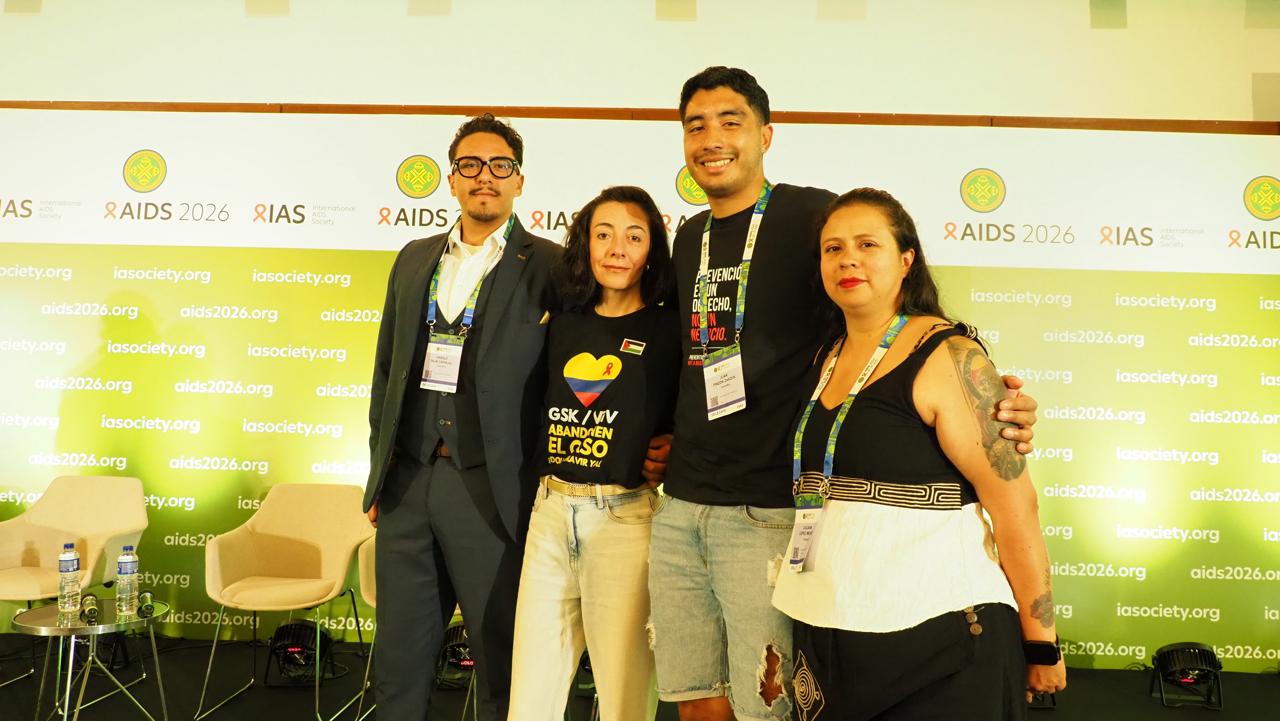
The Andean Community Court of Justice has dismissed a legal challenge by pharmaceutical giants ViiV Healthcare and Shionogi to Colombia’s compulsory licence for a widely recommended HIV treatment, reinforcing governments’ ability to use patent law safeguards to protect public health. Make Medicines Affordable (MMA) partner Fundación IFARMA participated in the proceedings as a third party supporting Colombia’s defence.
The Court ruled unanimously on 27 April 2026 that Colombia had not violated Andean intellectual property regulations when it authorised the use of generic versions of dolutegravir, a first-line antiretroviral medicine used to treat HIV. The decision marks a significant victory for access to medicines advocates, although three separate legal challenges remain before Colombian courts.
The case centred on Article 65 of Decision 486, the Andean Community’s common intellectual property framework. ViiV Healthcare and Shionogi argued that Colombia had failed to establish sufficiently clear limits on the duration of the compulsory licence.
The Court rejected their arguments, finding that a compulsory licence issued in the public interest does not necessarily require a fixed end date, provided its duration is governed by objective, verifiable conditions and applicable legal limits. In its judgment, the Court stated that the duration of a compulsory licence must be linked to “objective, verifiable criteria that are independent of the absolute discretion of the administrative authority,” particularly where public health emergencies are concerned.
The Colombian Ministry of Health welcomed the decision, stating: “This reaffirms the validity of compulsory licensing as a tool to strengthen access to essential medicines and guarantee Colombians’ right to health.”
Fundación IFARMA played an active role in defending the licence through legal submissions supporting the Ministry of Health, opposing precautionary measures and legal challenges, participating in the public hearing, and mobilising civil society support. “For us, this case goes beyond a legal dispute: it is about ensuring that public health takes precedence over commercial interests and defending countries’ ability to use legitimate tools to address access barriers. However, the legal victory is only one step; the real challenge is ensuring that the licence translates into effective access to generic dolutegravir for the people who need it,” said Juliana López, a social worker, epidemiologist, and director of Fundación Ifarma.
Dolutegravir is recommended by the World Health Organization as a preferred first-line treatment for people living with HIV. Patent protections have historically restricted generic competition, potentially keeping treatment costs higher than necessary.
In October 2023, Colombia’s Ministry of Health declared the use of dolutegravir to be a matter of public interest, paving the way for a compulsory licence. The country’s Superintendency of Industry and Commerce subsequently granted the licence in April 2024, permitting government use of generic dolutegravir despite the patent protections then in force.
According to Colombia’s Ministry of Commerce, a 30-tablet supply of generic dolutegravir was estimated to cost approximately 15,000 Colombian pesos (US$4.71), compared with 450,000 pesos (US$141) for the branded treatment, representing a potential price reduction of nearly 97%.
These lower prices have translated into concrete government procurement. A government implementation report dated August 2025 documented the purchase of nearly 820,000 bottles of generic dolutegravir-based HIV treatment through the Pan American Health Organization’s procurement mechanism, at an average estimated cost of 15,839 pesos (US$4.97) per bottle. The procurement included treatment for Venezuelan migrants living with HIV and other populations covered by the compulsory licence.
ViiV Healthcare and Shionogi challenged the measure, arguing that its duration did not comply with Andean regulations. In October 2024, the General Secretariat of the Andean Community concluded that Colombia had not breached its obligations. The companies subsequently took the issue to the Andean Court in January 2025.
Despite the ongoing legal challenge, Colombia received its first shipment of generic dolutegravir under the compulsory licence in February 2025, a milestone welcomed by MMA and its partners as an important step towards expanding access to affordable HIV treatment.
In July 2024, activists from Make Medicines Affordable (MMA) and its partners called on ViiV Healthcare to withdraw its legal challenge during the International AIDS Conference in Munich, arguing that the company’s actions threatened access to affordable HIV treatment in Colombia.
The Court recognised that the duration of a public-interest compulsory licence can be linked to the circumstances that justified its issuance, rather than depending solely on a predetermined expiry date. The Superintendency of Industry and Commerce described it as a legitimate and proportionate means of protecting the right to health, particularly for vulnerable populations.
The judgment reinforces the work of MMA and its partners to challenge intellectual property barriers that restrict access to affordable medicines. The ruling also provides a legal precedent for civil society organisations defending the use of TRIPS flexibilities against pharmaceutical industry challenges across the region.
“The Andean Court of Justice’s ruling provides an important precedent for Colombia and a valuable reference for other countries facing similar pressures. It reinforces the principle that international intellectual property rules must be interpreted in a way that preserves governments’ ability to safeguard public health and improve access to essential medicines,” stated López.
The following three proceedings remain before Colombian courts: two challenges are regarding the Ministry of Health’s 2023 resolutions establishing the public-interest basis for the compulsory licence, and a third challenges pertains to the 2024 resolutions through which the licence was granted. Civil society organisations, including Medicinas para la Gente Latinoamérica and GHP Corporation, have intervened to defend the measures.
The underlying dolutegravir patent expired on 28 April 2026, one day after the judgment. Colombia has since moved to broaden access to dolutegravir-based treatment beyond the populations initially covered by the compulsory licence. Other patents covering HIV treatment formulations and combinations may continue to present barriers to generic competition.
While the outcome of the remaining cases is still uncertain, the Andean Court’s judgment establishes an important precedent for future public health measures across the region, affirming the authority of governments to use intellectual property safeguards to protect public health.
“This ruling sends a clear message: legal pressure from pharmaceutical companies should not deter governments from using legitimate legal tools to put people’s health before commercial interests. For other countries, this case highlights the importance of strong legal frameworks, political commitment, and civil society mobilisation to defend the right to health,” stated Lopez.