
16 September 2026
ITPC Global and Make Medicines Affordable (MMA) campaign are following with interest the announcement of a new agreement between the Pan American Health Organization (PAHO) and Gilead Sciences intended to facilitate access to twice-yearly injectable lenacapavir for HIV prevention across Latin America and the Caribbean.
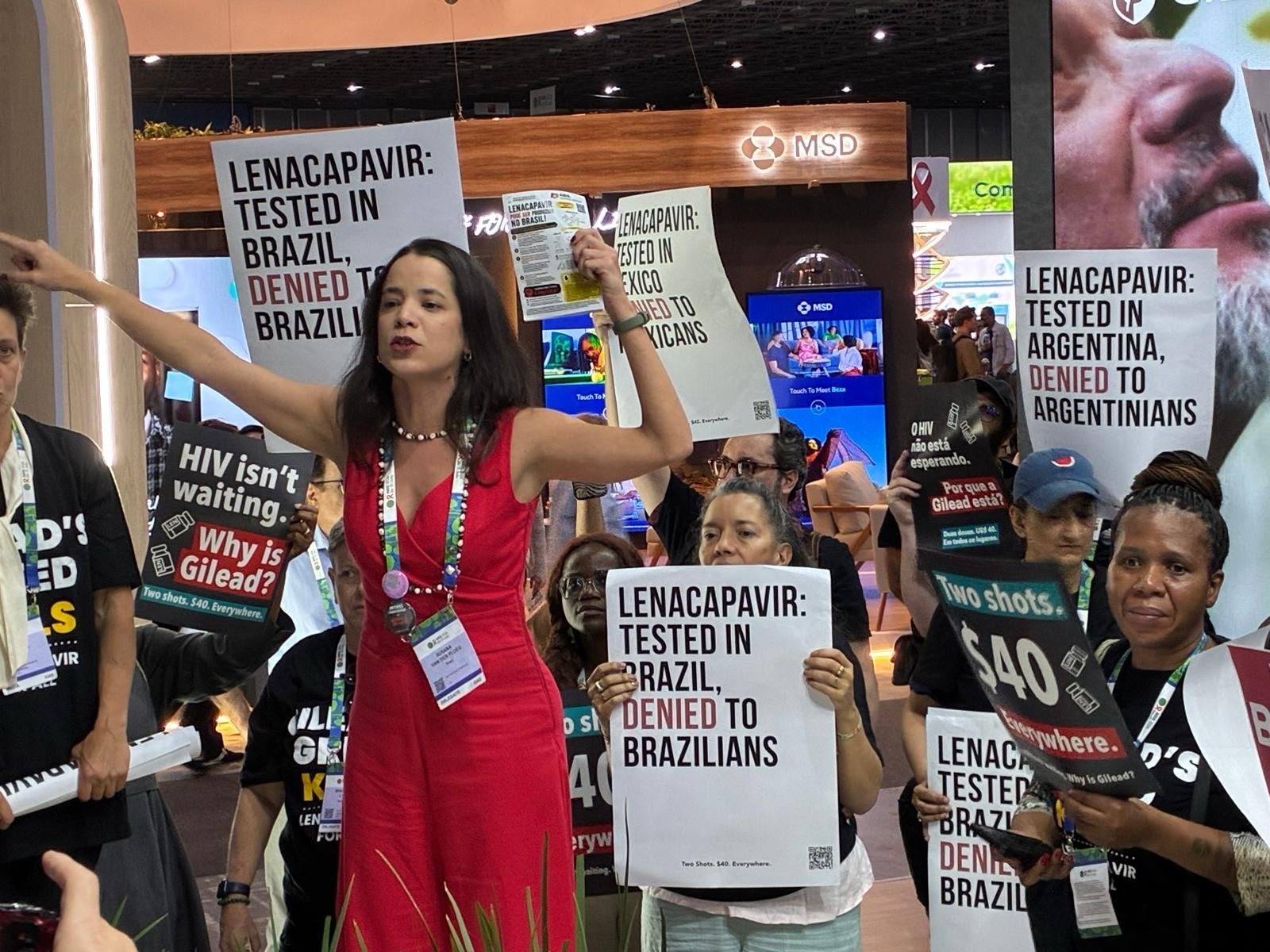
The agreement is particularly relevant for countries such as Argentina, Brazil, Chile, Colombia, Costa Rica, Ecuador, El Salvador, Guatemala, Mexico, Panama, Paraguay, Peru, Uruguay and Venezuela, which were excluded from Gilead’s voluntary licensing agreements for lenacapavir.
Creating a procurement pathway for these countries is an important step. But a pathway to access is not the same as access.
“We have been calling for solutions for the countries left outside Gilead’s voluntary licence. This agreement may create a pathway, but we still do not know the most basic thing: what will countries actually pay? Without a price, volumes and a timeline for supply, we cannot yet say what this agreement will mean for access.”- Othoman Mellouk, Access to Medicines and Health Technologies Lead, ITPC Global
The announcement provides no information on some of the most important elements that will determine whether lenacapavir can actually be introduced and scaled up as a public-health intervention: price, procurement volumes, supply commitments and timelines.
ITPC therefore calls on PAHO and Gilead to publicly clarify:
- What price will countries pay for lenacapavir through the PAHO Regional Revolving Funds? Is there a single regional price, and how was affordability determined?
- When will countries be able to place orders, and when will the first deliveries take place?
- What volumes has Gilead committed to supply through the mechanism, and are sufficient quantities guaranteed to support national scale-up?
- Which countries have already expressed demand, and what are the expected procurement volumes?
- What conditions are attached to the agreement, including any volume requirements, confidentiality provisions or other restrictions?
- How will the mechanism support sustainable access, rather than creating a separate higher-priced market for middle-income countries excluded from generic competition?
- What is the relationship between this agreement and local production and technology transfer, particularly in countries such as Brazil where manufacturing capacity already exists?
“For Central American countries, price and predictability of supply are not technical details — they will determine whether lenacapavir can actually reach the people who need it. Governments need to know what they will pay, when they can procure, and what quantities will be available so they can plan and budget for meaningful scale-up. An access pathway without this information leaves countries unable to plan for access.” – Daniel Ambelis de León, Interim Director, ITPC-LATCA, Guatemala
Transparency on these questions is essential.
“Transparency is not an optional part of access. Governments and communities need to know the terms under which essential health technologies are being made available. If this agreement is intended to enable large-scale public-health access, its price, supply commitments and implementation conditions should be made public.” – Solange Baptiste, Executive Director, ITPC Global
Lenacapavir has the potential to transform HIV prevention. But its public-health impact will depend on whether governments can purchase it at prices that allow implementation at scale — not simply whether a procurement channel exists.
The PAHO mechanism should therefore complement, not substitute for, broader efforts to expand generic competition including the use of TRIPS flexibilities and overcome the exclusion of middle-income countries from voluntary licences. Access should not mean accepting an opaque and potentially higher-priced alternative to the generic competition available elsewhere.
“For Brazil and other countries in our region that were excluded from the voluntary licence, the fundamental question remains affordability. We need access at a price that makes large-scale public provision possible. Regional procurement can be part of the solution, but it should not replace generic competition, local production and meaningful technology transfer.”- Veriano Terto Jr., Vice-President, Brazilian Interdisciplinary AIDS Association (ABIA)
ITPC and Make Medicines Affordable call on PAHO and Gilead to publish the pricing, supply, volume and implementation terms of this agreement.
Communities, governments and people who could benefit from lenacapavir need to know not only that a pathway exists, but when the medicine will arrive, in what quantities, and at what price.