
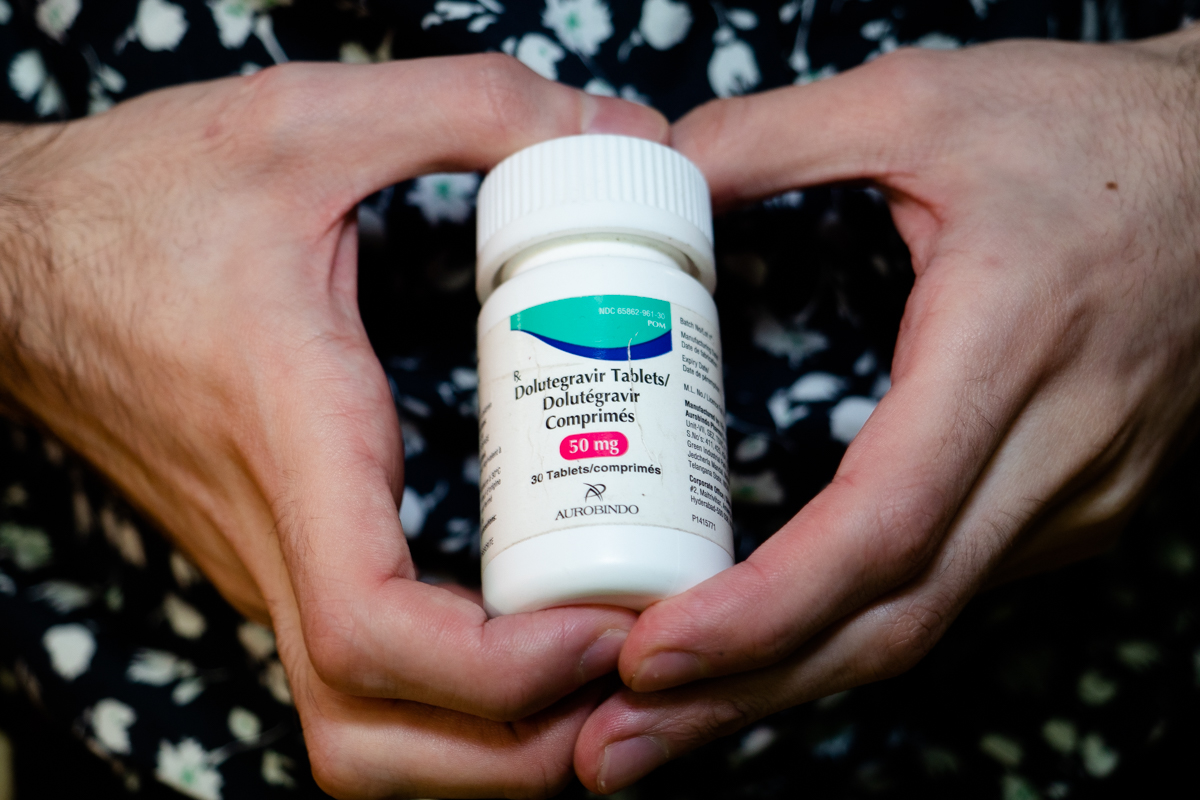
Fundación GEP and the Viet Nam Network of People Living with HIV (known as VNP+), members of the Make Medicines Affordable campaign, have filed oppositions against patent applications by ViiV Healthcare covering paediatric formulations of dolutegravir (DTG), one of the most widely used antiretroviral medicines for treating HIV.
Dolutegravir belongs to a class of antiretroviral medicines known as integrase inhibitors and is recommended by the World Health Organization for first- and second-line HIV treatment across population groups, stating it is “more effective, easier to take and has fewer side effects than alternative drugs.” In Argentina, DTG is used as a first-line treatment for people over six years old who weigh more than 14 kilograms.
Globally, approximately 2.4 million children and adolescents are living with HIV. Although children account for only 3% of people living with HIV worldwide, they represent 12% of AIDS-related deaths.
Argentina: Rejecting applications can open door for local manufacturing of paediatric DTG
Fundación GEP submitted the oppositions to Argentina’s National Institute of Industrial Property, (INPI) in response to applications filed by pharmaceutical company ViiV Healthcare, due to the pharmaceutical company’s applications lacking novelty and an inventive step which are fundamental requirements under Argentina’s Patent Law 24.481. The applications under examination are P20210101730 (AR 122718A1, titled “Formulations”) and P20210101732, (AR 122720A1, titled “A Dispersible Tablet Formulation”). Fundación GEP has requested that INPI reject both applications and ensure that the technologies remain in the public domain.
Fundación GEP says the patent applications represent an attempt to obtain monopoly rights over paediatric versions of a medicine whose underlying compound was not patented promptly in Argentina.
“It is striking that, unlike other countries in the region—such as Brazil and Colombia, for example, where there are existing patents and DTG is under a monopoly—the company ViiV did not promptly apply for any patent on the dolutegravir compound in our country, but did so later on the pediatric formulations,” said María Lorena Di Giano, Executive Director of Fundación GEP and the lawyer sponsoring the oppositions.
Such secondary patent applications can be used to extend or create monopoly control over new formulations of existing medicines, even where the claimed changes do not meet national patentability standards. These practices can delay generic competition, restrict local manufacturing and keep medicine prices unnecessarily high.
In Argentina, 3,162 cases involving children exposed to HIV through perinatal transmission were reported between 2021 and 2023. Of the 90 children born with confirmed HIV during that period, 73 acquired the virus through perinatal exposure and 17 through breastfeeding. Only 43 are currently receiving antiretroviral treatment, and just 13 have achieved viral suppression.
Paediatric formulations are designed to provide children with doses that are appropriate for their age and weight. Ensuring access to these formulations is essential to fulfilling children’s right to health, including the protections established under Argentina’s Law 27.675 on HIV, viral hepatitis, tuberculosis and other sexually transmitted infections, stated Fundación GEP.
Rejecting the patent applications could allow local and publicly owned laboratories to manufacture paediatric DTG without facing monopoly restrictions.
“If the patents are rejected, as we have requested, the technology will remain in the public domain and local laboratories can produce these antiretrovirals, even through public production. Public laboratories have identified the production of pediatric formulations — which are scarce worldwide — as a priority, as is the case with the Tomás Perón Institute producing abacavir and lamivudine, or the University of Rosario producing zidovudine,” said José María Di Bello of Fundación GEP.
Local production can strengthen the security of medicine supplies, reduce reliance on a single pharmaceutical company and help governments procure treatment at more affordable prices. It is particularly important for paediatric medicines, which are often produced in smaller quantities and remain scarce in many parts of the world.
“We hope that our contributions to both cases being processed by the INPI will be key to ensuring that our children have access to the technologies they need to continue living,” Di Giano added.
Vietnam civil society group: ‘Adding flavours or sweeteners to children’s medication is not a new formulation’
In Vietnam, the Viet Nam Network of People Living with HIV, known as VNP+, has also filed a pre-grant opposition against a ViiV Healthcare patent application covering a paediatric formulation of dolutegravir.
The opposition asks the Intellectual Property Office of Vietnam to reject patent application 1-2023-00319 which claims a dispersible tablet combining dolutegravir with the antiretroviral medicines abacavir and lamivudine, as well as processes for manufacturing the formulation. The amended claims also cover a multilayer tablet in which dolutegravir is placed in a separate layer from abacavir.
According to VNP+, the claimed formulation is neither new nor inventive under Vietnamese intellectual-property law, as earlier scientific and patent documents show that the three-drug combination was already known, that dispersible and multilayer tablets were established pharmaceutical technologies, and that dolutegravir had previously been formulated alongside other antiretroviral medicines.
The filing notes that the combination of dolutegravir, abacavir and lamivudine was already used in the HIV medicine Triumeq before the patent application’s 2020 priority date, therefore, converting this known combination into a dispersible tablet suitable for children is a predictable adaptation rather than a new invention.
The filing also stated that selecting a dispersible dosage form for children who may struggle to swallow tablets, adding flavouring or sweetening agents, and adjusting the quantities of active ingredients to established treatment guidelines are routine formulation practices. It also argues that separating the medicines into different tablet layers to improve stability or reduce interactions relies on techniques already disclosed in earlier patents.
VNP+ stated that the patent specification is too broad and does not explain the alleged invention (producing the claimed three-medicine tablet) with sufficient clarity. In addition, international patent examiners had already raised concerns about novelty and inventive step while a corresponding United States application was rejected on the grounds that its claims were not new or were obvious in light of existing knowledge.
“Paediatric dolutegravir is a lifeline for children living with HIV, and that lifeline must belong to them, not be monopolized by a patent. The right to life of children living with HIV cannot be traded for commercial exclusivity,” said Dong Dang Do, Chairman of VNP+. “Opposing the paediatric dolutegravir patent is a critical step toward bringing affordable treatment to these fragile lives who need it every single day.”