
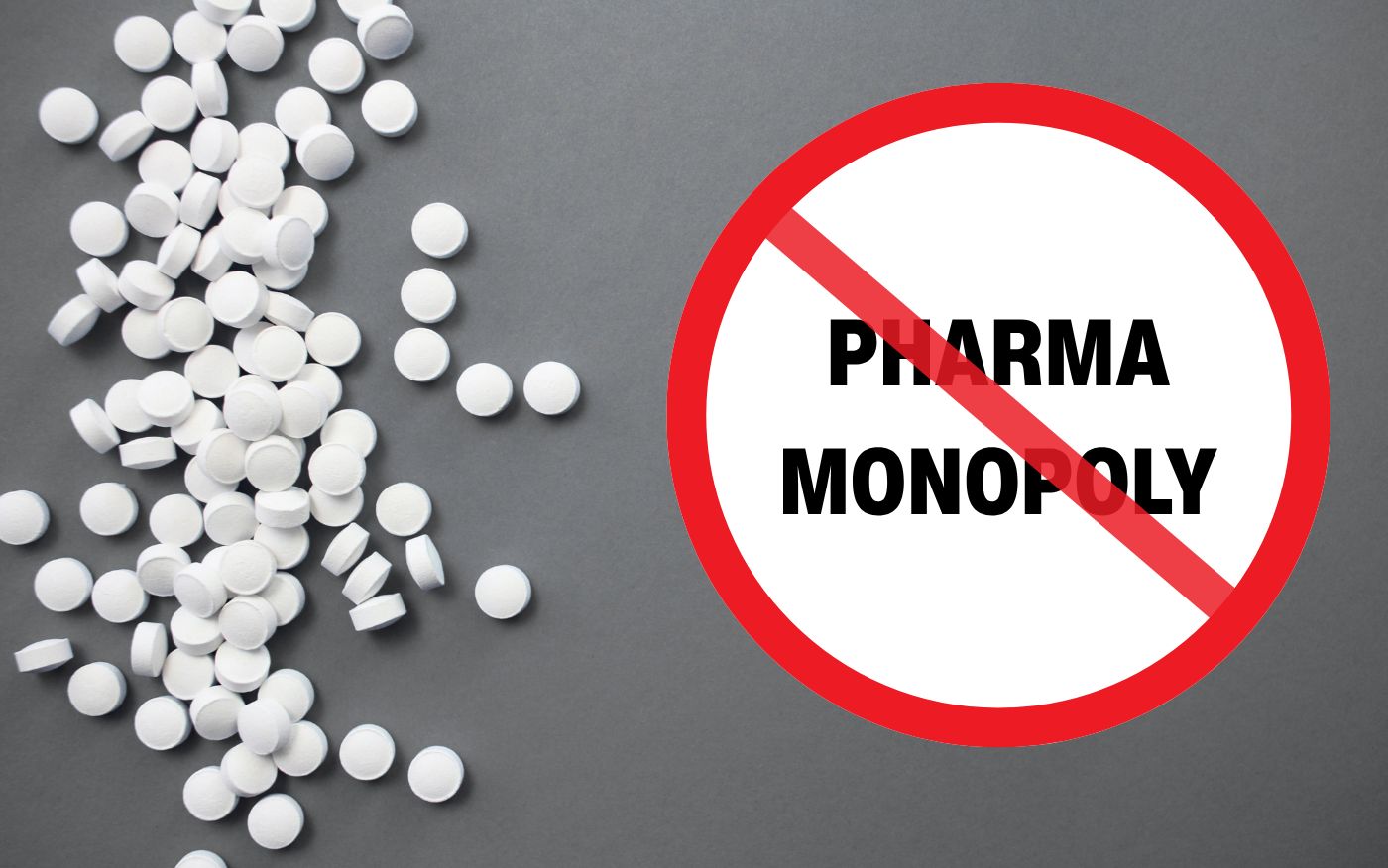
MMA partner organizations in Uzbekistan, Thailand and Ukraine have filed patent oppositions against applications covering delamanid, an antibiotic used to treat multidrug resistant tuberculosis, due to the routine pharmaceutical techniques used to produce the drug rather than innovation, which is required for a patent. This is in addition to patent oppositions filed by civil society groups in Armenia, Belarus, Kazakhstan, and Kyrgyzstan.
The oppositions, filed by Ishonch Vo Hayot in Uzbekistan, the Thai Network of People Living with HIV/AIDS (TNP+) in Thailand, and 100% Life in Ukraine, target patent applications filed by Otsuka Pharmaceutical on delamanid-containing compositions. Across the three countries, MMA partners argue that granting secondary patents on the medicine could delay generic competition, keep prices high, and restrict access to treatment for people with drug-resistant TB.
Delamanid is used as part of treatment for multidrug-resistant and rifampicin-resistant TB. WHO guidance states that delamanid may be included in longer treatment regimens for MDR/RR-TB patients aged three years and older.
Civil society groups including Médecins Sans Frontières (MSF) have repeatedly raised concerns about the affordability of delamanid. In 2019, MSF noted that a six-month treatment course was priced at US $1,700 through the Global Drug Facility (GDF) despite research from the University of Liverpool showing that the drug could be produced and sold at profit for as little as US $5 to US $16 per month, if used widely by national TB programs.
MSF called on the Japanese pharmaceutical company Otsuka to lower the price of delamanid and stated: “As long as these new drugs are priced out of reach for TB programs, an all-oral treatment regimen … will remain a distant reality. People will continue to suffer the devastating side effects of older drugs that have to be injected, including permanent deafness.”
Thailand: TNP+ challenges routine formulation
In Thailand, MMA partner TNP+ submitted a third-party observation against Otsuka’s delamanid patent application, describing the application as an example of evergreening, where predictable modifications are used to extend monopoly rights. The submission argues that the claimed composition combines known ingredients and techniques that a skilled pharmaceutical professional would ordinarily use, and therefore fails to meet Thailand’s patentability requirements.
“This action in Thailand reflects our commitment to preventing the misuse of the patent system to extend unjustified monopolies on essential medicines,” said Chalermsak Kittitrakul, Project Manager for Access to Medicines at TNP+. “Together with civil society partners across the regions, we are taking action to challenge these unfair monopolies and remove barriers to equitable access to lifesaving treatment.”
Uzbekistan: Transparency concerns during patent oppositions
In Uzbekistan, MMA partner Ishonch Va Hayot filed third-party comments on December 25, 2025, with the country’s Ministry of Justice and the Intellectual Property Center against application IAP 2021 0009, titled “Delamanid-containing composition,” filed by Otsuka Pharmaceutical. The filing is the first patent opposition by a public organization in the country.
The application, relating to solid oral dosage forms of delamanid, stated that Otsuka’s approaches for poorly soluble medicines, including the use of surfactants, polymers and granulation techniques, are already well known and therefore do not meet the standards for novelty or inventive step, which is required for the patent.
In early 2026, Uzbekistan’s Institute of Intellectual Property responded that a patent had been granted based on amended claims, which differed from the version cited by the NGO in its appeal. However, the final scope of protection remains unknown until publication in the bulletin. The case also exposed limits in Uzbekistan’s current procedure, where third parties had access only to abbreviated materials, while amended claims were not publicly available during examination.
“Our third-party comments were prepared based on these limited materials, while during the examination, the applicant amended the claims. As a result, as activists, we were objectively deprived of the opportunity to promptly and substantively prepare reasoned objections based on the current formula,” stated Maria Shibaeva, treatment access legal specialist at ITPC-EECA. “The current national procedure significantly limits the participation of third parties in the examination of an application prior to the grant of a patent and this needs to change to ensure our full and democratic participation in these legal processes.”
According to government procurement data, delamanid was one of Uzbekistan’s most expensive TB treatment options listed at about US $121 per 48-tablet adult package and US $85 per children’s package in 2024. This would bring the cost of a 24-week treatment for an adult to US $1,694. These costs place pressure on public budgets and can limit access to treatment, Ishonch Va Hayot stated.
EECA countries stand against evergreening patents and high prices
Civil society organizations from Armenia, Belarus, Kazakhstan, and Kyrgyzstan have prepared third-party observations on a patent application for a solid dispersion containing delamanid. The organizations are ready to submit these observations for review and call on the Eurasian Patent Office (EPO) to refuse the grant of a patent for this secondary product.
In the organizations’ view, the claimed solution does not meet the patentability criteria as it lacks inventive step, the disclosure is insufficient, the scope of the claims is overly broad, and some of the claimed features are not supported by the original application materials.
Delamanid remains one of the costly treatment options. In 2025, the price of the originator medicine for a pack of 48 tablets was approximately US $85 in Uzbekistan, US $157 in Kazakhstan, and US $87–100 in Russia.
Currently, in the countries concerned, with the exception of Belarus, delamanid is not under patent protection, as Otsuka’s primary patents have already expired. However, granting a new patent for an already known compound would effectively extend an expired monopoly, keep prices high, and limit generic competition.
For EECA countries, where the burden of MDR-TB remains high, this has a direct impact on access to modern and essential treatment.
Ukraine: TB treatments already impacted by war
In Ukraine, MMA partner 100% Life filed a pre-grant opposition on June 5, 2025, against application UA a202100047, linked to PCT application PCT/JP2019/023006. The case is currently under substantive examination.
The use of polymers and surfactants to improve the solubility of active pharmaceutical ingredients is already well established, states 100% Life, which indicates that the delamanid composition lacks an inventive step. 100% Life submitted four additional prior art documents, to show that the preparation of composition comprising delamanid particles and surface stabilizer comprising polymer and surfactant, as well as the incorporation of such composition into a solid oral dosage form would have been obvious to a skilled person at the time of filing.
“It is critically important that patients’ access to life-saving treatment, including delamanid, is not blocked by weak secondary patents that do not satisfy conditions for legal protection defined in national patent legislation, particularly fail to satisfy patentability criteria,” said Veronika Kochubei, Intellectual Property Counsel at 100% Life. Our opposition asks the Patent Office to apply the law rigorously, so that public health is not undermined by claims that do not meet the inventive step requirement.”
According to Global Drug Facility tender data cited by 100% Life, Otsuka’s delamanid was priced at US $1,190 for a six-month treatment course in 2025. Access-to-medicines experts estimate it could be manufactured and sold profitably for US $30 to $96 for the same period.
Otsuka’s attempts to patent delamanid in Ukraine is particularly concerning given that maintaining life-saving TB services has already been a challenge during the ongoing war, in which Ukraine’s health system has been attacked, with devastating losses including injured and killed health care workers and patients and the destruction of health infrastructure including TB hospitals.
“The dangerous environment caused by the war has challenged our work with partners in Ukraine and neighboring countries on prevention, testing and treatment for HIV and TB,” the Global Fund stated in a report. “Drug-resistant TB remains a significant public health threat in Ukraine, affecting 39 percent of people diagnosed with TB.”
According to 100% Life, through opposing unjust patents and patent applications, and enabling the affordability of TB drugs such as delamanid will help ensure equitable access to life-saving treatments for all patients, particularly the most vulnerable.