
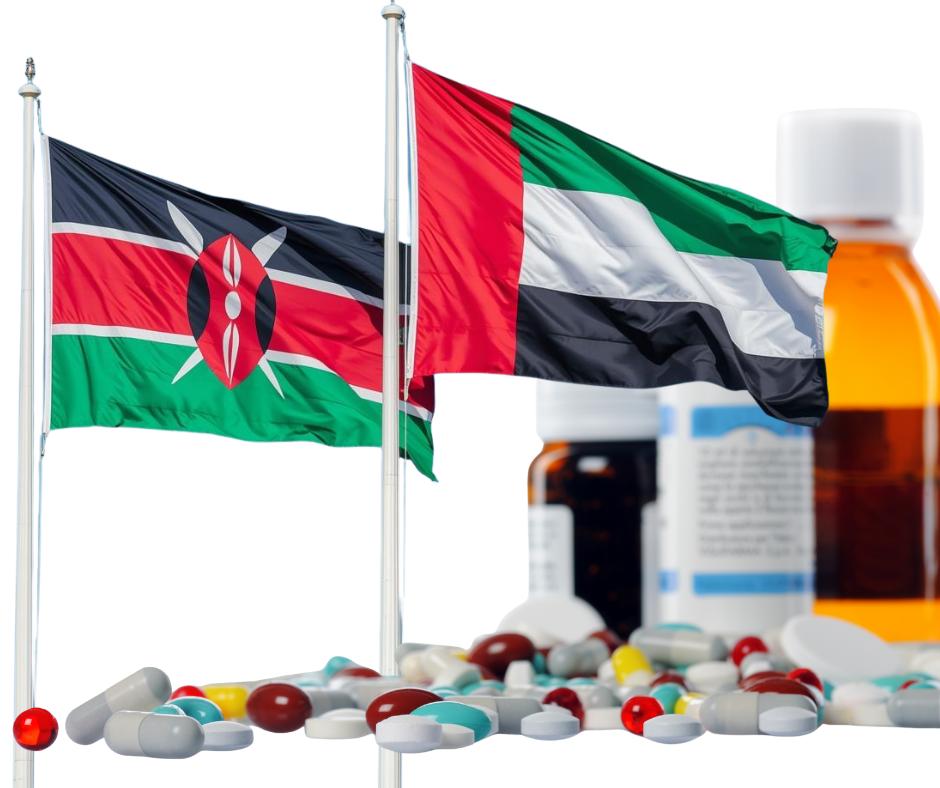
Kenya has ratified a trade deal that undermines access to affordable medicines, weakens local production, and is “a direct assault on the constitutional right to health” according to MMA partner KELIN, who together with civil society groups and impacted communities, sought to strike clauses in the agreement which restrict and hinder public health.
The Kenya–United Arab Emirates Comprehensive Economic Partnership Agreement (CEPA) includes TRIPS-plus provisions — notably in Article 13.33 — that introduce 5 years of data exclusivity for any new pharmaceutical product approved for use in Kenya. This would prevent the approval of affordable generic medicines even where patents have expired or do not exist. And unlike patents, this new type of monopoly on medicines would be almost impossible to challenge in the court.
Additionally, Article 13.33 obliges Kenya to introduce a patent linkage mechanism, which will discourage any local and foreign generics manufacturers to register medicines in Kenya, even when the patent is to expire soon.
This policy shift
- delays access to life-saving medicines,
- increases healthcare costs for households already burdened by economic hardships,
- shrinks the space to use World Trade Organization (WTO) recognized TRIPS flexibilities,
- weakens local pharmaceutical manufacturing, including Kenya’s ongoing pursuit of WHO maturity level 3 (ML3) certification,
- and endangers Universal Health Coverage (UHC) commitments and undermines Article 43 on the Right to Health.
These contentious clauses include TRIPS-plus provisions – meaning they go beyond the standards set by the WTO’s TRIPS Agreement, which obliges all WTO members, including LMICs, to introduce patent monopolies in all fields of technology, including on health products. TRIPS-Plus provisions, involve even more strengthening of IP rights at the expense of public health and access to affordable medicines.
The Kenya Legal & Ethical Issues Network (KELIN) jointly with coalitions of organisations and institutions in Kenya working on health and human rights, has criticised the government for negotiating trade deals with devastating public health consequences. “Kenya cannot claim to champion public health while ratifying agreements that make medicines unaffordable. It cannot claim to support local industry while embedding rules that suffocate it,” stated Pesa Okania, a programme officer with KELIN.
Trade Agreements Pressure Global South
In recent years, many developing countries have been pressured to implement even stricter laws than are required in the TRIPS Agreement, known as ‘TRIPS plus’ provisions, as part of trade agreements with developed countries. CEPA is yet another example of this, whereby Kenya is being pressured to restrict and hinder public welfare in order to trade with the UAE.
“Economic trade with powerful countries simply cannot come at the expense of public health anywhere, particularly in Kenya where the government has failed to invest meaningfully in public health,” said Pesa Okania, a programme officer with KELIN, who stated that CEPA would lock Kenya into monopolies that delay generic medicines and inflate prices.
Allan Maleche, the Executive Director at KELIN adds that “Prosperity cannot — and must not — be achieved at the expense of the constitutional and fundamental rights of the Kenyan people”.
In a public participation forum, KELIN jointly with communities, Parliament Committees on Trade and Health, and civil society stakeholders explicitly raised these dangers during the review process. The Parliamentary Departmental Committee on Trade, Industry and Health submitted a report to the National Assembly recommending the ratification of the Comprehensive Economic Partnership Agreement (CEPA) subject to reservations of Article 13.3 in order to protect Kenya’s public health priorities.
The recommendation was clear: ratify the CEPA only with reservations protecting access to medicines. Yet, this safeguard was not adopted — leaving Kenya bound to provisions that compromise constitutional rights and disregard public input. Without affordable medicines and strong local production including the ability to produce life-saving generic medicines, Kenya remains vulnerable. “Trade should strengthen our economy, not strip our rights,” Okania said.
Kenya Ratifies CEPA
On November 27, the National Assembly disregarded these recommendations and ratified the agreement without the proposed reservations.
According to KELIN, this trade agreement will “delay the entry of affordable generics, entrench monopolies, and weaken [Kenya’s] already fragile pharmaceutical sector.” — “We cannot forget the hard-earned lessons of COVID-19: access to medicines is a matter of life and death, and access must never depend on income or corporate goodwill,” says Allan Maleche, the Executive Director at KELIN.
“The Kenyan legislature has chosen trade interests over the health and dignity of its people. By ignoring public input and allowing TRIPS-plus barriers to affordable medicines, the government has undermined the very foundation of UHC — the epitome of accessible and affordable healthcare. You cannot speak of UHC while legislating away the ability of ordinary Kenyans to obtain essential treatment,” said Allan Maleche, the executive director of KELIN.
KELIN continues to advocate on this issue, by calling on the government to revisit CEPA implementation to secure legal safeguards for affordable medicines, guarantee transparency and public participation in future trade agreements, align trade policy with constitutional obligations on the right to health and UHC, and strengthen domestic pharmaceutical capacity and health sovereignty.
“Trade agreements must serve Kenyan lives — not limit them,” reiterates Maleche.