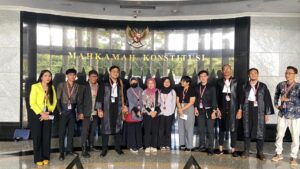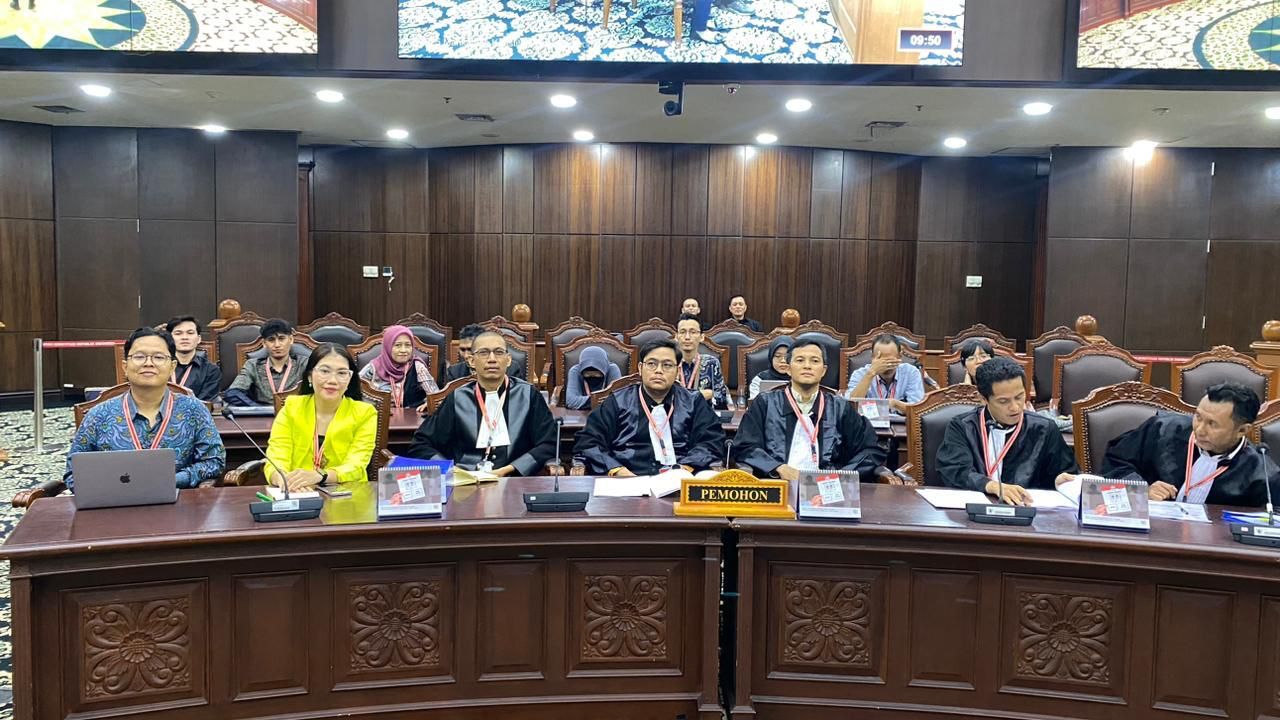
Jakarta, December 17th 2025 – A group of Indonesian treatment access organizations – including Make Medicines Affordable member Indonesia AIDS Coalition (IAC) – have united under the Coalition for Patient Rights Advocacy for Access to Medicines and officially filed a judicial review of Law No. 65 of 2024 on Patents (Patent Law) to the Indonesian Constitutional Court.
The Petitioners argue that the new law contains provisions that threaten public access to essential medicines, particularly due to the removal of Article 4(f), which previously served as a safeguard against patent evergreening – a strategy used by pharmaceutical companies to extend patent monopolies on essential medicines.
Patent evergreening refers to various tactics employed by companies to prolong patent protection in order to maintain market monopolies and maximize profits. As a result, generic medicines are prevented from entering the market, keeping drug prices high. This situation not only burdens patients but also increases the financial strain on the State, which covers treatment costs through the National Health Insurance (JKN) program.
Tony Richard Samosir, Chairperson of the Indonesian Dialysis Patients Community (KPCDI) and one of the Petitioners, emphasized that Article 4(f) in the previous Patent Law was a crucial instrument for protecting public health.
“Article 4(f) clearly prevented patents from being granted for new forms or secondary uses of known substances without a significant increase in efficacy. The removal of this article opens the door to dangerous patent monopolies that harms patients,” Tony stated.
Arni Rismayanti, Chairperson of the Indonesian Pulmonary Hypertension Foundation (YHPI), cited the example of Sildenafil, a drug used for the treatment of two different health conditions: erectile dysfunction and pulmonary hypertension. With the removal of Article 4(f), the same compound can now obtain two separate patents, allowing monopolies to persist and prices to remain high.
“This is a real threat to public access to essential medicines. When patents are extended without clear innovation, drug prices remain high and place an enormous burden on patients, families, and the JKN program. This will cause Indonesia to fall further behind in providing affordable therapies for patients with rare and chronic diseases,” she stressed.
Irwandy Wijaya from the Indonesia AIDS Coalition (IAC) explained that secondary patent filings have already hindered public access to critical medicines such as Bedaquiline for the treatment of drug-resistant tuberculosis (DR-TB).
“The primary patent for Bedaquiline in Indonesia expired in 2023, but five secondary patents have extended the monopoly until 2036. Similar situations have occurred with medicines for HIV-AIDS, hepatitis C, cancer, Diabetes Mellitus (DM), and even COVID-19,” Irwandy noted.
Rahmat Maulana Sidik, Executive Director of Indonesia for Global Justice (IGJ), emphasized that Article 4(f) had long provided a legal basis for the public to file oppositions against pharmaceutical patents that fail to meet the patentability criteria.
“With the removal of Article 4(f) in the current Patent Law, public oversight over pharmaceutical patents that do not meet patent standards has been significantly weakened. Yet drug patents are directly linked to human lives,” he asserted.
Maulana also highlighted lessons from the COVID-19 pandemic, where pharmaceutical companies were able to file new patents for old drugs simply because a new potential use was identified.
“Without protections like Article 4(f), such strategies can block generic drug production and severely limit public access. Civil society has deep concerns about the impact of patent monopolies on affordable access to medicines. That is why we have submitted this judicial review to the Constitutional Court,” he concluded.
The Petitioners urge the Constitutional Court to reinstate Article 4(f) as stipulated in the previous Patent Law, in order to ensure that the public’s right to health is protected and not sacrificed for the sake of pharmaceutical industry monopolies.